Taxidermy
The Best is a full-service taxidermy specializing in custom, life-size
mounts, habitat reproduction and game heads.
All our work is custom made with patient master craftsmanship, the
newest in techniques, and the very best and finest in materials
anywhere in the world.
Each animal is mounted on a specially designed wall or table habitat,
of your own design. Custom designed pedestal game head mounts
incorporating native habitats are commonplace, and each life-sized
mammal comes complete with a uniquely designed native habitat base.
Following these guidelines, your trophy is taken from a “mount”
to a work of art.
Our guarantee to you from Taxidermy the Best is to preserve your
specimen as God had intended it to be. We strive to make your
trophy OUR trophy. As we are getting ready to mount your trophy
we make sure we act as if we are mounting one of our very own kills.
At Taxidermy The best from start to finish we guarantee you will
be a 100% satisfied...
North
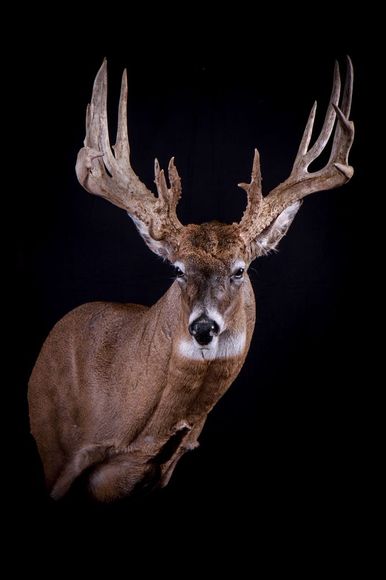
America Game heads of North America are among
the most frequently mounted specimens in taxidermy. Their popularity
is unsurpassed among both taxidermists and sportsmen alike. Deer,
elk, and pronghorn antelope make up the vast majority of North American
mounts, but bear, cougar, wild boar, caribou, mountain sheep and mountain
goats are also popular subjects for game head display
Africa
and Asia Your African trophy taxidermy mounts will be
in your trophy room or on the walls of your home for Many years
to come and will invoke all the memories of a great African hunting
experience.
Taxidermy
(from the Greek for arrangement of skin)
is the act of mounting or reproducing dead animals for display (e.g.
as hunting trophies) or for other sources of study. Taxidermy can
be done on all vertebrate species of animals including mammals,
birds, reptiles and amphibians.
The methods that taxidermists practice have been
improved over the last century, heightening taxidermy quality and
lowering toxicity. The animal is first skinned. This process is
similar to removing the skin from a chicken prior to cooking. This
can be accomplished without opening the body cavity so the taxidermist
usually does not see internal organs or blood.
The skin is tanned and then placed on a polyurethane form. Clay
is used to install glass eyes. Forms and eyes are commercially available
from a number of suppliers. If not, taxidermists carve or cast their
own forms.
“We
are dedicated to capturing the mood and the spirit of each life
like
sculptural creation”